
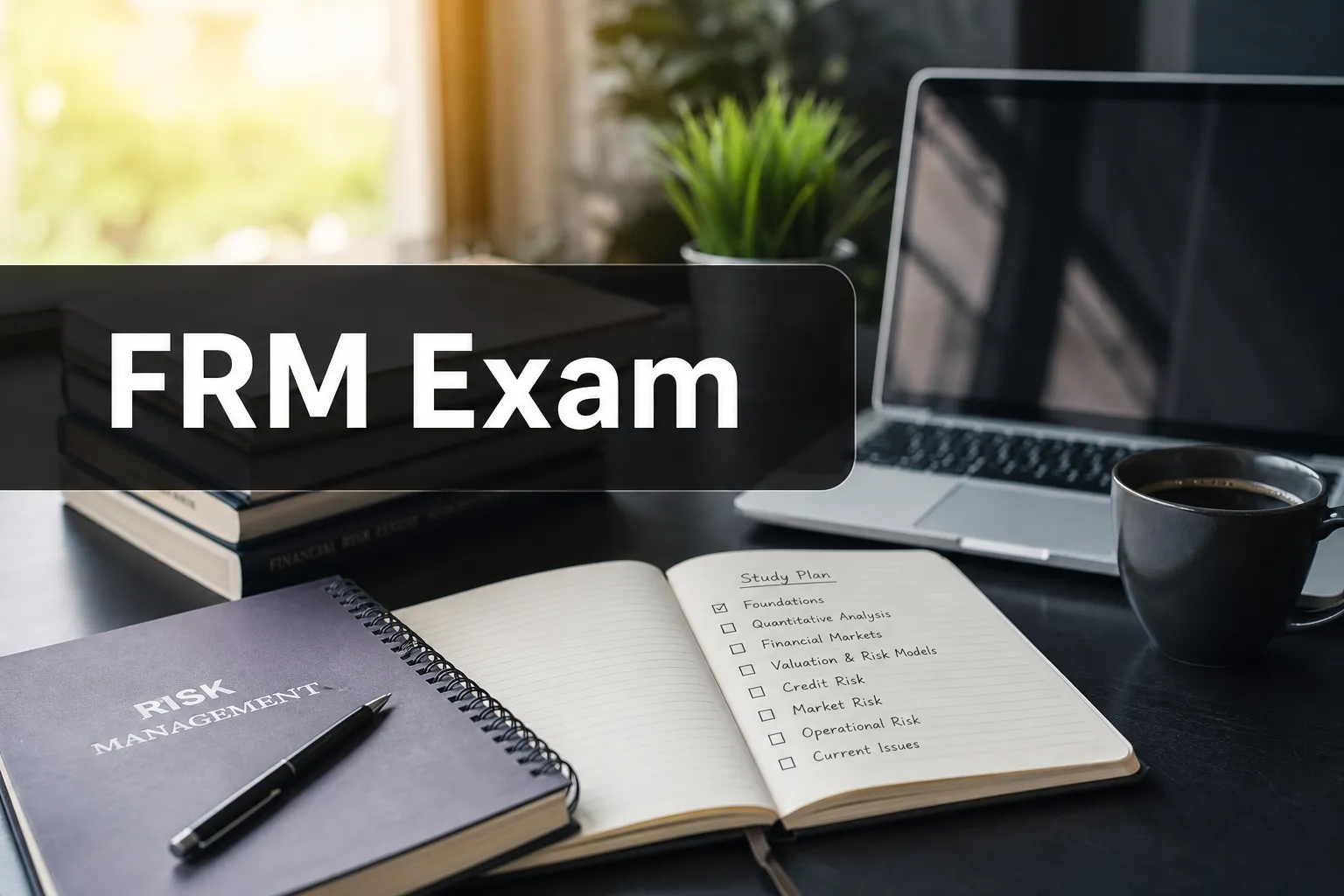
FRM Exam: The Practical Guide to Passing, Planning, and Using AI to Study Smarter
Students and professionals usually land on the topic of the FRM exam with the same underlying questions: How hard is it, how should I prepare, what does it cost, and is it really worth it? If you are balancing a demanding schedule, dense quantitative material, and pressure to pass on the first attempt, you do not need more vague motivation. You need a clear plan.
The Financial Risk Manager designation is one of the most recognized credentials in risk management. But most articles stop at basics like topic weights and fees. What many candidates actually need is a decision framework: whether FRM fits their career, how Part I differs from Part II in practice, what an effective study system looks like, and how modern AI tools can reduce wasted effort.
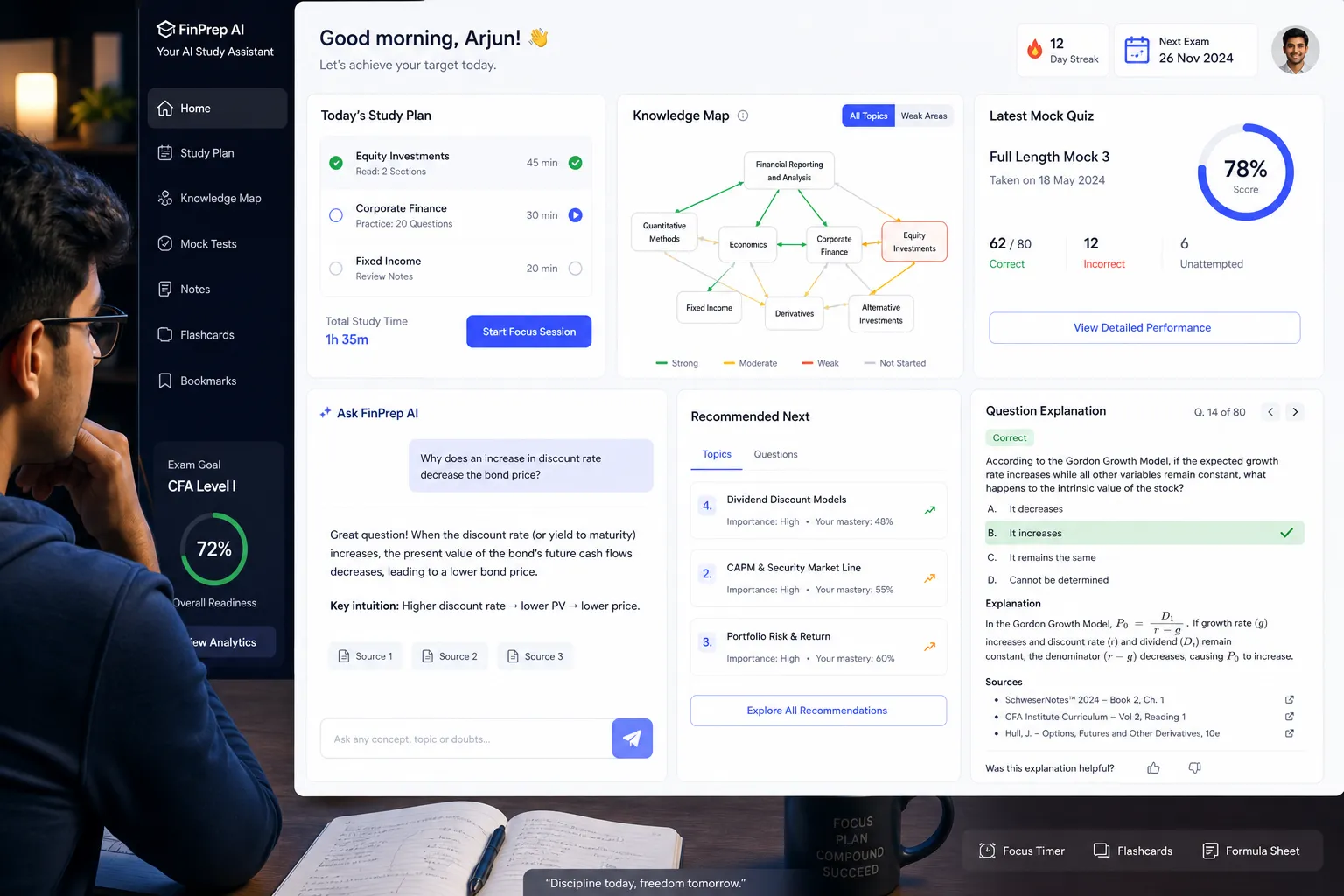
For ambitious learners, exam candidates, and working professionals, this is where a platform like CramAI fits naturally. Instead of juggling PDFs, notes, lecture clips, practice questions, and scattered summaries, you can turn all of that into a single adaptive study workflow: upload source materials, generate a personalized study plan, map related concepts across topics, identify weak areas, and get source-anchored explanations you can trust.
What the FRM Exam Actually Measures
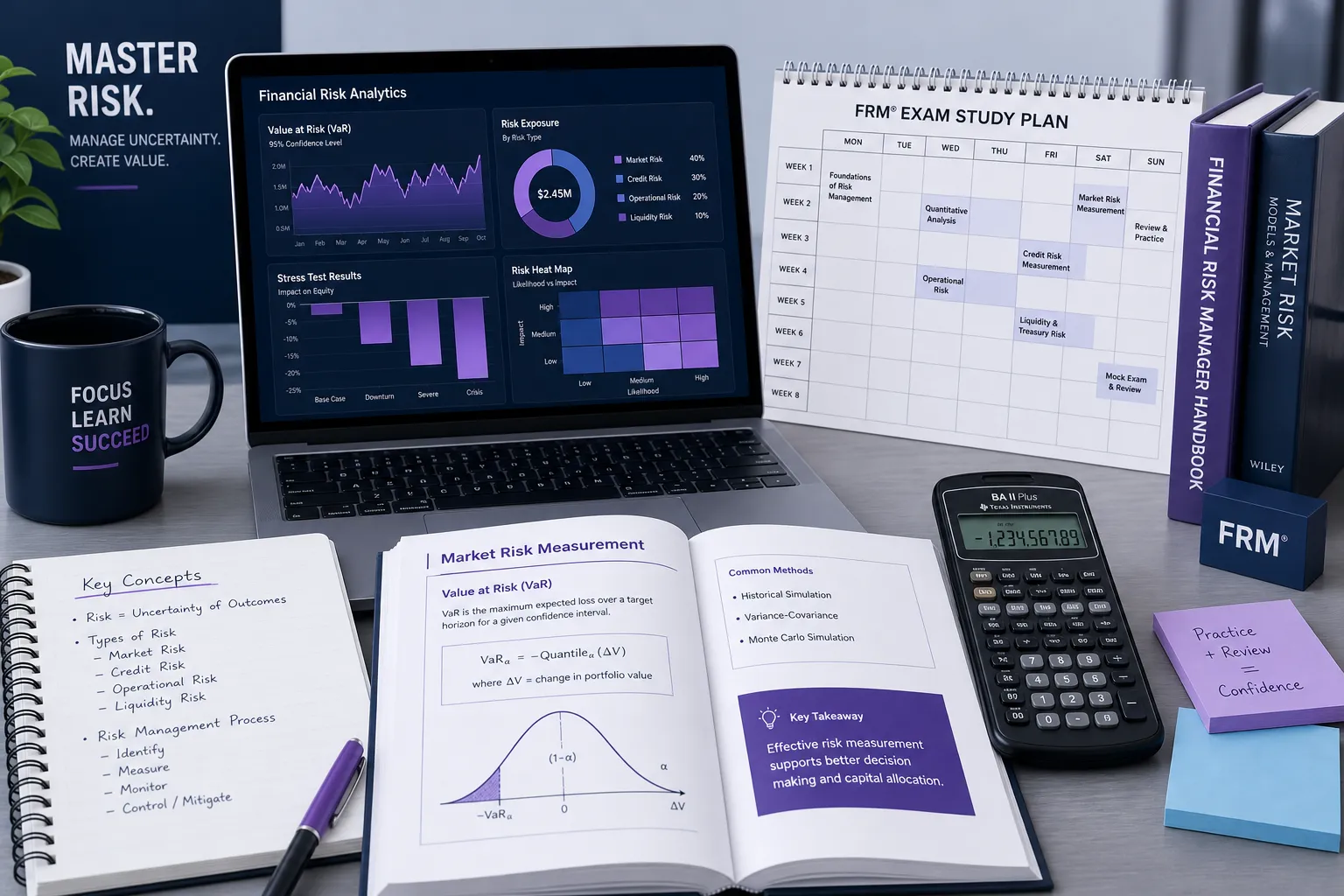
The FRM is not just a memorization test. It evaluates whether you can understand, interpret, and apply financial risk concepts in realistic contexts. That means success depends on more than reading the curriculum once.
You are expected to demonstrate competence in areas such as:
risk management foundations
quantitative analysis
valuation and risk models
market, credit, operational, and liquidity risk
investment and treasury-related risk decisions
current issues shaping global financial markets
In other words, the FRM exam rewards candidates who can connect theory to practice. That is why a strong preparation strategy needs to combine content review, active recall, applied question work, and structured revision.
Why the FRM Still Matters in 2026
The strongest case for the FRM is not prestige alone. It is relevance. Financial systems are becoming more interconnected, regulations are evolving, model risk is under greater scrutiny, and institutions increasingly need professionals who can interpret uncertainty rather than simply report numbers.
"According to the U.S. Bureau of Labor Statistics, the median annual wage for financial managers was $161,700 in May 2024. Employment in this field is projected to grow 15% from 2024 to 2034, much faster than the average for all occupations." - U.S. Bureau of Labor Statistics
"As of July 2026, the Financial Risk Manager (FRM®) certification, offered by the Global Association of Risk Professionals (GARP), has been earned by over 97,000 professionals across more than 190 countries and regions." - GARP
Those numbers matter because they show two things at once: global recognition and strong labor-market relevance. For candidates in banking, treasury, investment risk, model validation, regulatory compliance, enterprise risk, or adjacent analytics roles, the credential has enduring signal value.
FRM Part I vs Part II: What Changes Between the Exams
A lot of summaries mention that Part I is “foundational” and Part II is “applied.” That is true, but too general to guide preparation. Here is the practical difference.
Part I in Practice
Part I tests your command of core building blocks. The challenge is not just the content volume. It is the speed with which you need to move across quantitative topics, products, formulas, and framework-based questions.
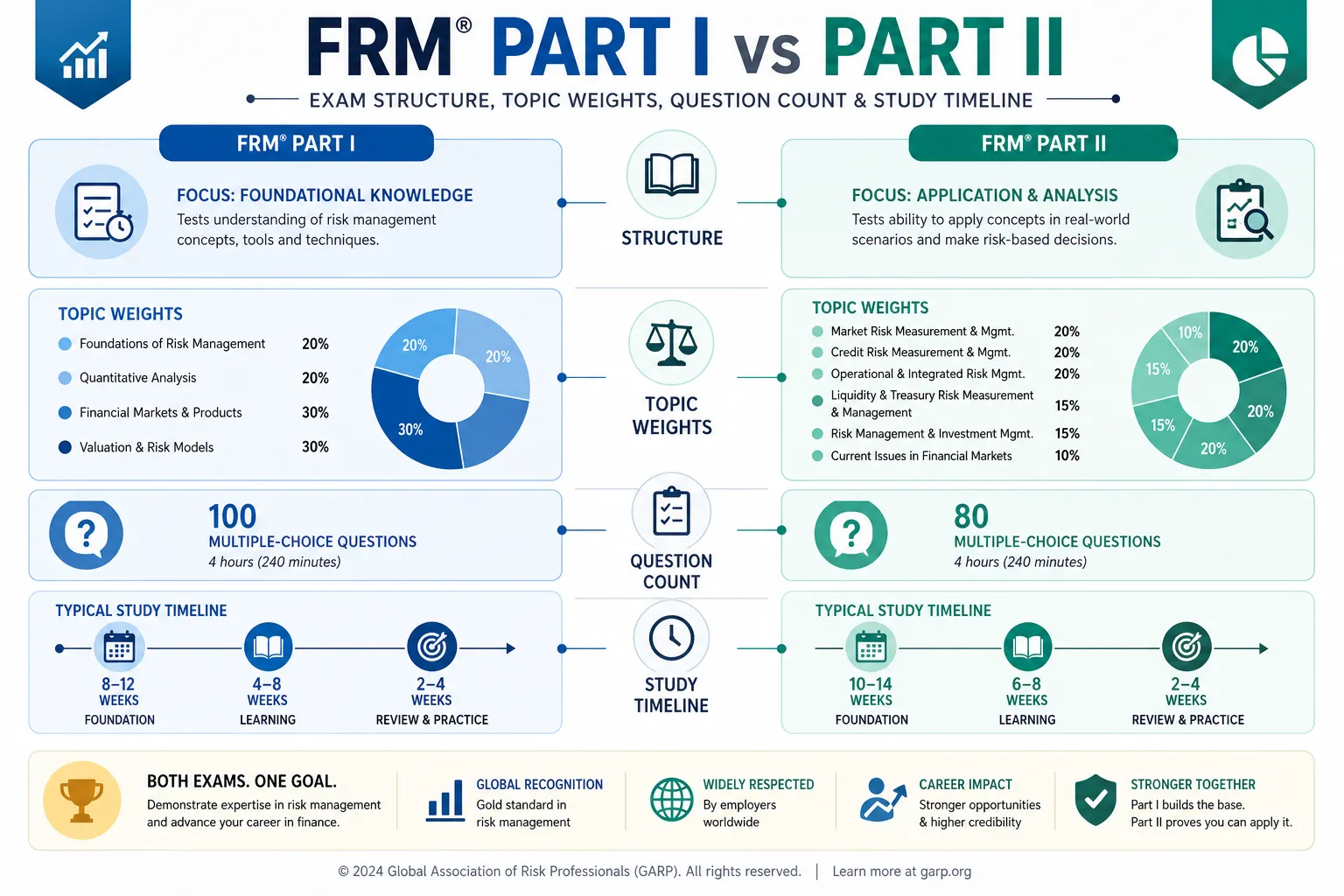
Part I includes 100 multiple-choice questions and typically covers:
Foundations of Risk Management
Quantitative Analysis
Financial Markets and Products
Valuation and Risk Models
Part II in Practice
Part II assumes you can already think in the language of risk. It focuses more on application, judgment, interpretation, and cross-topic reasoning.
Part II includes 80 multiple-choice questions and typically covers:
Market Risk Measurement and Management
Credit Risk Measurement and Management
Operational Risk and Resilience
Liquidity and Treasury Risk Measurement and Management
Risk Management and Investment Management
Current Issues in Financial Markets
FRM Exam Structure at a Glance
Component | FRM Part I | FRM Part II |
|---|---|---|
Question count | 100 | 80 |
Format | Computer-based multiple choice | Computer-based multiple choice |
Time allowed | 4 hours | 4 hours |
Focus | Foundations and tools | Application and interpretation |
Best study emphasis | Concepts, formulas, repetition | Scenario judgment, integration, exam technique |
Topic Weights You Should Actually Use for Planning
Competitor articles often list topic weights but fail to explain how to use them. Weighting should drive your time allocation, not just your awareness.
Part I Topic Weights
Topic | Weight |
|---|---|
Foundations of Risk Management | 20% |
Quantitative Analysis | 20% |
Financial Markets and Products | 30% |
Valuation and Risk Models | 30% |
Part II Topic Weights
Topic | Weight |
|---|---|
Market Risk Measurement and Management | 20% |
Credit Risk Measurement and Management | 20% |
Operational Risk and Resilience | 20% |
Liquidity and Treasury Risk Measurement and Management | 15% |
Risk Management and Investment Management | 15% |
Current Issues in Financial Markets | 10% |
How to Translate These Weights Into Study Hours
If you plan to study 240 hours for a part, your time should not be evenly split. Higher-weight topics deserve proportionally more review, more questions, and more revision cycles.
For example, in Part I:
20% topic = about 48 hours
30% topic = about 72 hours
That does not mean lower-weight sections are optional. It means your depth of practice should be heavier where the exam itself is heavier.
FRM Certification Requirements
To earn the FRM certification, you generally need to:
Pass FRM Part I
Pass FRM Part II
Demonstrate two years of relevant professional work experience
This matters because passing the exams alone is not the end state. If your goal is the designation rather than just exam completion, you should think about your work experience strategy early.
FRM Exam Dates and Fees in 2026
Based on the provided competitor material, FRM exams are offered in May, August, and November, with windows and deadlines varying by sitting. Registration timing matters because the pricing structure rewards early action.
Typical Fee Structure
Fee Type | Amount |
|---|---|
One-time enrollment fee for new candidates | $400 |
Early registration per exam part | $600 |
Standard registration per exam part | $800 |
What Candidates Often Miss About Cost
The true cost of the FRM exam is not just the exam registration fee. It usually includes:
enrollment fee
exam registration
official or third-party prep materials
question banks and mocks
opportunity cost from inefficient study time
That last point is where better systems matter. A learner who spends months revisiting low-priority material or rebuilding notes manually is paying in time and energy. CramAI helps reduce that hidden cost by focusing attention on the highest-value concepts, dynamically adjusting study strategy, and turning uploaded materials into usable study assets instead of passive documents.
Is the FRM Exam Hard?
Yes, the FRM exam is hard, but not in a vague, mystical way. It is difficult for specific reasons:
1. The Content Is Dense
Many topics are mathematically or conceptually heavy. You are not just learning terms; you are learning frameworks, relationships, and decision logic.
2. The Exam Rewards Application
Especially in Part II, you need to interpret scenarios rather than recite definitions.
3. Time Pressure Is Real
Four hours sounds generous until you are working through calculations, nuanced wording, and answer choices that are all plausible.
4. Most Candidates Underestimate Review
Reading once is not learning. The biggest gap between average and top-performing candidates is often not intelligence but quality of revision.
The Most Effective FRM Study Plan
A good study plan is not simply a calendar with chapter counts. It should manage comprehension, retention, and exam readiness.
A 4-Phase Study Model
Phase 1: Build the Foundation
Read the core material
Identify formulas and recurring themes
Create concise summaries after each topic
Focus on understanding before speed
Phase 2: Convert Knowledge Into Recall
Use active recall
Drill practice questions by topic
Build error logs
Revisit weak concepts within 48 hours
Phase 3: Integrate and Simulate
Mix question sets across topics
Practice under time pressure
Analyze wrong answers by cause: concept, formula, misread, or fatigue
Phase 4: Final Revision and Decision Training
Take mock exams
Review condensed notes only
Prioritize high-yield errors
Tighten time management
A Sample 16-Week FRM Study Schedule
Weeks | Focus |
|---|---|
1–4 | First pass through core readings and concept notes |
5–8 | Topic-based questions, formula recall, weak-area review |
9–12 | Mixed practice, cumulative revision, deeper application |
13–14 | Full mocks and timing practice |
15–16 | Final review, targeted weak-point repair, exam strategy |
This kind of structure becomes much easier to manage with CramAI’s personalized study planning. Instead of manually reorganizing PDFs and spreadsheets, you can upload your materials and generate a tailored roadmap that adapts as your performance changes.
How to Study FRM Smarter With AI
This is one of the biggest content gaps in most competitor articles. They explain the exam, but not how modern learners can study more intelligently.
What AI Should Do in FRM Prep
AI should not replace your judgment. It should reduce friction and improve focus.
For FRM candidates, the most valuable AI support includes:
converting uploaded PDFs, notes, slides, and videos into organized study paths
producing concise summaries from long readings
linking connected concepts across quantitative and qualitative sections
generating targeted quizzes from your own materials
identifying knowledge gaps through dynamic assessments
anchoring answers to original sources for trust and verification
Why CramAI Fits FRM Preparation
CramAI is especially useful for demanding certification tracks because it supports the full learning cycle:
Learn: transform raw materials into structured plans and summaries
Test: generate practice questions and targeted self-checks
Assess: spot weak areas and misconceptions quickly
Guide: adjust the strategy in real time as your performance changes
Support: keep everything traceable to source material for confidence and accountability
That matters for FRM because many candidates do not fail from lack of ambition. They fail from cognitive overload. There is simply too much to track manually. CramAI reduces that load by surfacing what matters most, when it matters most.
Common FRM Mistakes That Cost Candidates Points
Overemphasizing Reading, Underemphasizing Questions
Passive review feels productive but often creates false confidence.
Memorizing Formulas Without Context
You need to know when and why a formula applies, not just what it looks like.
Ignoring Inter-topic Links
Risk topics are interconnected. Market risk thinking can affect how you interpret liquidity, valuation, and portfolio questions.
Waiting Too Long to Take Mocks
Mock exams should shape your preparation, not merely confirm it at the end.
Using Too Many Unconnected Tools
When notes live in one app, videos in another, questions elsewhere, and performance tracking nowhere, your study system becomes the problem. This is exactly the kind of fragmentation CramAI is designed to solve.
FRM vs CFA: Which One Fits Your Career Better?
The FRM and CFA are often compared, but they serve different professional goals.
Factor | FRM | CFA |
|---|---|---|
Primary orientation | Risk management | Investment management |
Best fit for | Risk, treasury, credit, model, regulatory roles | Asset management, equity research, portfolio management |
Exam path | 2 parts | 3 levels |
Core identity | Specialized | Broad finance and investing |
Choose FRM If You Want To:
work deeply in risk functions
build technical credibility in market, credit, liquidity, or operational risk
position yourself for enterprise or institutional risk roles
Choose CFA If You Want To:
work in investment analysis or portfolio management
build broad financial analysis capability
pursue traditional buy-side or advisory pathways
Can Both Make Sense?
Yes. For some professionals, they are complementary. But if your current or target role is clearly risk-oriented, FRM is usually the more direct path.
What Kind of Jobs Value the FRM?
The designation is relevant across more roles than many candidates assume.
Common Career Paths
market risk analyst
credit risk analyst
operational risk manager
treasury risk professional
model risk analyst
enterprise risk manager
regulatory risk specialist
risk consultant
quantitative risk professional
Industries That Value FRM Knowledge
commercial banking
investment banking
asset management
insurance
consulting
fintech
regulatory institutions
corporate treasury functions
This breadth is why a flexible platform matters. Different candidates will bring different source materials, different time constraints, and different professional goals. CramAI’s ability to handle PDFs, URLs, YouTube content, documents, audio, and slides makes it suitable not just for individual exam candidates but also for teams, institutions, and knowledge creators organizing structured finance education.
How to Use Mock Exams the Right Way
Mocks are diagnostic tools, not vanity metrics.
After Every Mock, Review These Five Questions
Which topics produced the most errors?
Which errors came from weak understanding versus careless execution?
Where did timing break down?
Which formulas did you forget under pressure?
What study adjustment should happen immediately this week?
This is another place where adaptive systems create leverage. A static plan says, “Finish Chapter 12 next.” A smarter system says, “Your recent results show repeated weakness in valuation applications and treasury risk. Reallocate the next three sessions accordingly.” That kind of feedback loop is exactly what makes AI-assisted study meaningful rather than gimmicky.
A Better Note-Taking Strategy for FRM Candidates
Many candidates create too many notes and review too little of them. Better note-taking is selective.
Use a 4-Layer Framework
Layer | Purpose |
|---|---|
Core concept note | Define the idea in plain language |
Formula note | Capture equation, variables, and use case |
Pitfall note | Record common traps and confusing distinctions |
Application note | Add a short real-world or exam-style scenario |
CramAI can help organize this process by turning uploaded readings into concise summaries, connected concept maps, and reusable study objects rather than forcing you to build everything from scratch.
How Much Study Time Do You Really Need?
A common benchmark is around 240 hours per exam part, though actual needs vary based on background, work schedule, and comfort with quantitative content.
You May Need More Time If:
you are new to derivatives or risk concepts
your quantitative foundation is rusty
you are studying while working full-time
you need multiple passes to retain technical material
You May Need Less Time If:
you already work in risk or quantitative finance
you have strong overlap from prior study
you learn efficiently through active recall and structured practice
The point is not the number alone. The point is study efficiency. Two candidates can spend the same number of hours and get very different results depending on how targeted their workflow is.
Final Verdict: Is the FRM Exam Worth It?
For candidates serious about risk management, the FRM remains one of the clearest and most respected ways to build credibility. It offers global recognition, strong role alignment for risk careers, and a practical framework for understanding how institutions measure and manage uncertainty.
But the designation is not valuable just because it is hard. It is valuable because it changes how you think.
If you are preparing for the FRM in 2026, do not settle for a fragmented study process. Use a system that helps you learn faster, review smarter, and trust your materials. That is where CramAI can become more than a study tool. It can become your intelligent exam-prep partner: organizing complex content, generating personalized plans, surfacing weak spots, connecting ideas across topics, and grounding answers in the source material you uploaded.
If you want to prepare with less guesswork and more momentum, try CramAI and turn your FRM prep into a focused, adaptive, evidence-based study system.
FAQ
Which is tougher CFA or FRM?
In most cases, the CFA is considered tougher overall because it spans three exam levels and covers a broader body of knowledge. The FRM is still highly challenging, but it is more specialized and focused on risk management.
Is FRM a tough exam?
Yes, the FRM is a tough exam due to dense quantitative material, real-world application, and time pressure. Candidates usually perform best when they combine concept mastery, question practice, and structured revision.
How much does the FRM exam cost?
For new candidates, the FRM typically includes a one-time $400 enrollment fee plus registration fees per exam part. Early registration is commonly $600 per part, while standard registration is commonly $800 per part.
Is FRM worth it in 2026?
Yes, for professionals targeting risk-focused roles, the FRM is still worth it in 2026. It remains globally recognized, aligned with real market needs, and valuable for careers in banking, treasury, consulting, and enterprise risk.
What is the salary of CFA vs FRM?
Salaries vary more by role, geography, and experience than by designation alone. FRM holders often work in risk-related positions, while CFA charterholders are more common in investment roles; both can lead to strong compensation depending on career path.
Is 27 too old for CFA?
No, 27 is not too old for CFA or FRM. In fact, many candidates begin professional certifications in their late twenties or later, especially once they have clearer career direction and stronger discipline for long-term study.