
Homework Picture Solver for Faster Study Help
Students rarely struggle because information is unavailable. They struggle because homework arrives in inconvenient formats, time is limited, and the path from “I don’t get this” to “I can solve this myself” is often unclear.
That is exactly why the modern homework picture solver has become so popular. Instead of retyping a problem from a worksheet, textbook, whiteboard, or screenshot, a learner can upload an image and get help in seconds. But speed alone is not the point. The real question is whether image-based AI can make homework help faster and smarter without turning study into passive answer-copying.
This guide explains how a homework picture solver works, what features actually matter, where these tools help most, and how to use them in a way that improves learning instead of replacing it. We’ll also look at how a more complete platform like CramAI goes beyond one-off image solving by turning scattered materials into personalized, source-anchored study support.
"A December 2025 survey by the RAND Corporation found that 62% of students from middle school through college reported using AI for homework assistance." - EurekAlert!
That number matters for one reason: AI study tools are no longer niche. The quality gap between “quick answer machines” and true learning support now matters more than ever.
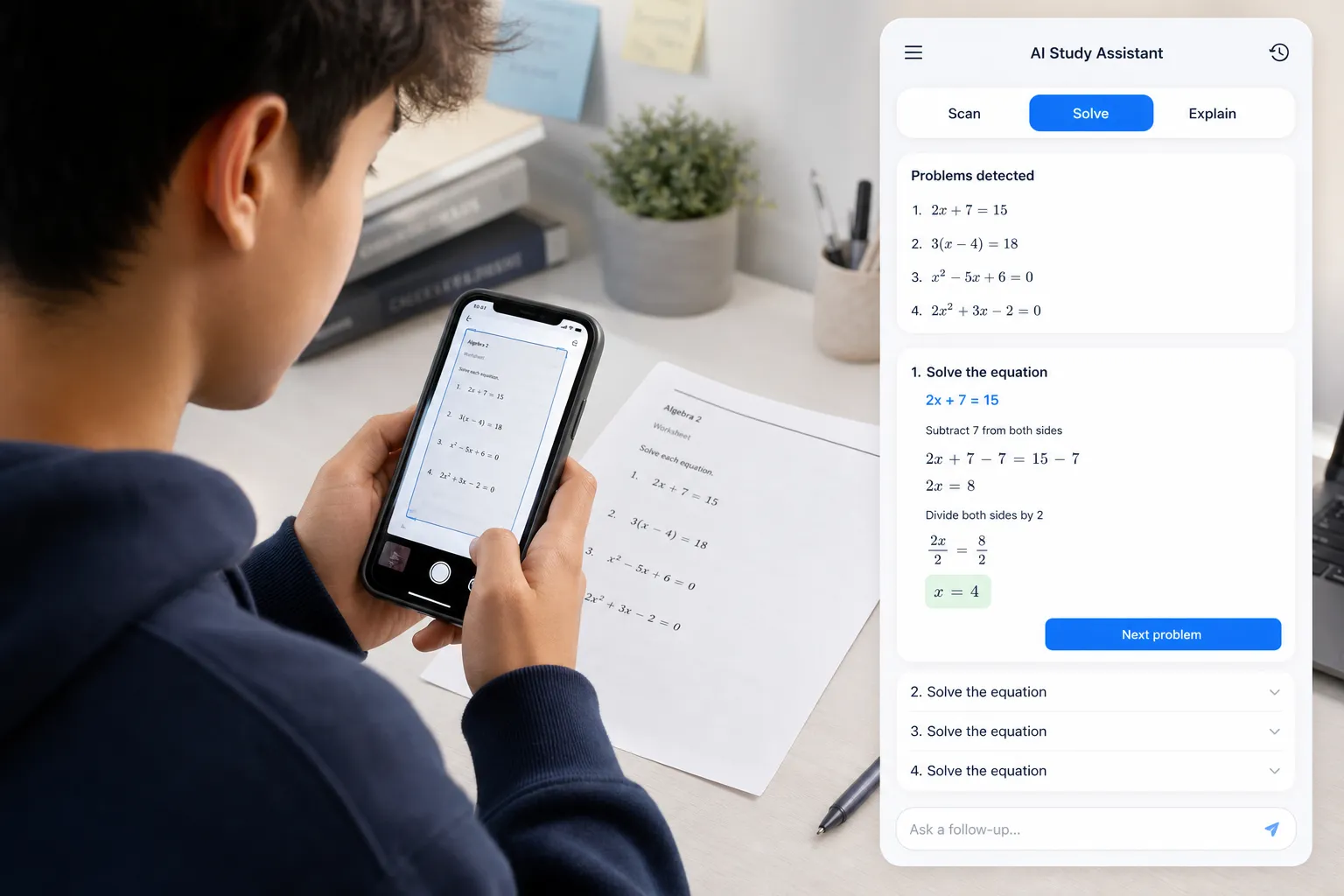
What a Homework Picture Solver Actually Does
At a basic level, a homework picture solver lets a student submit an image of a question and receive an answer or explanation. The image might be:
a phone photo of a worksheet
a screenshot from a digital assignment
a textbook page
handwritten notes
a graph, equation, or diagram
a slide or classroom whiteboard capture
The best tools do much more than read text from an image. They combine visual recognition, interpretation, subject reasoning, and response generation into one workflow.
A weak tool says, “Here is the answer.”
A better tool says, “Here is what the problem asks, how to solve it, why this method works, and where your confusion probably started.”
That difference is where real educational value lives.
How a Homework Picture Solver Works
Most students see only the upload box. Under the hood, the process is more layered.
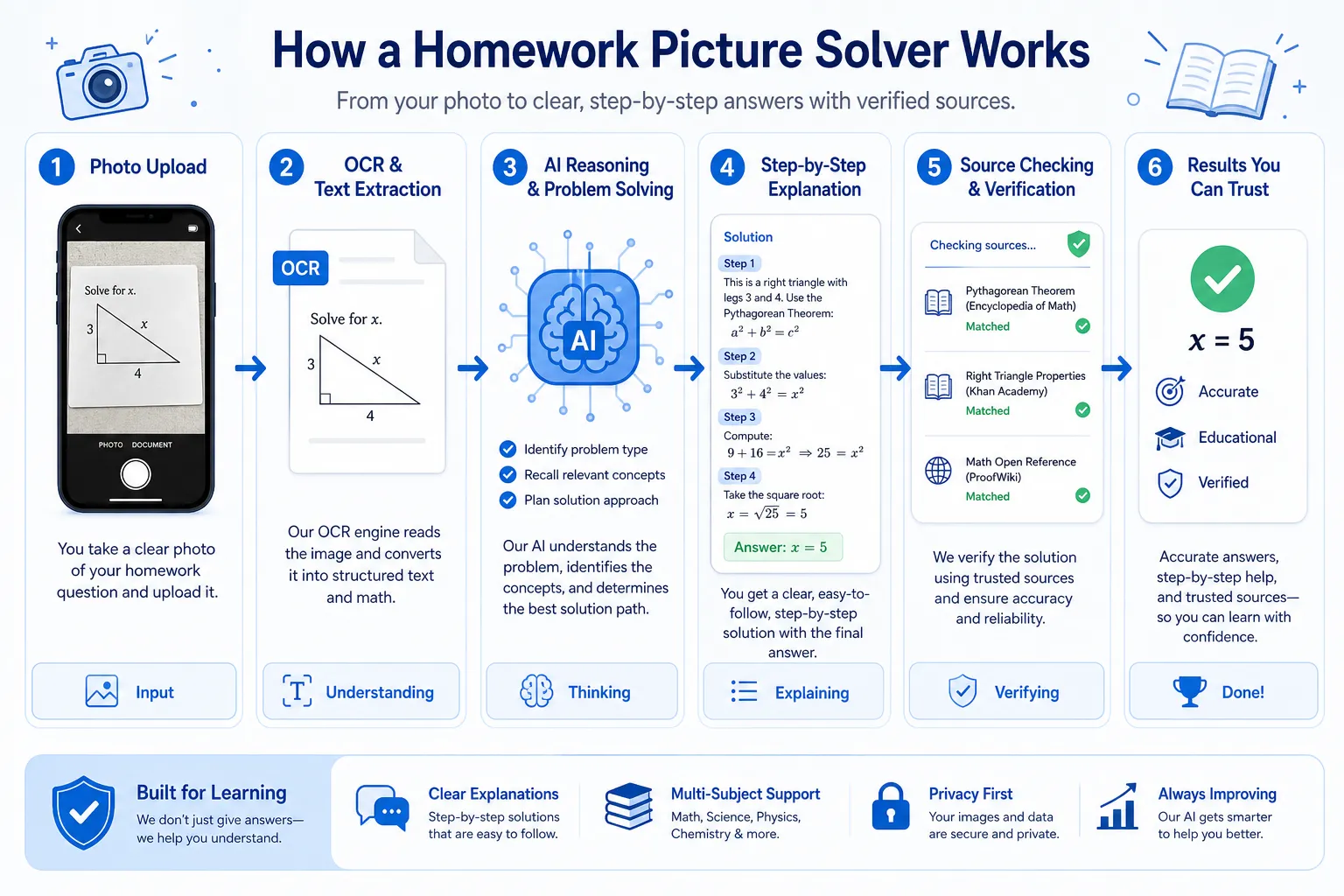
1. Image Capture and Preprocessing
The system first receives the image and tries to improve it for analysis. That may include:
sharpening blurry text
correcting rotation
increasing contrast
isolating the relevant problem area
separating handwriting from background noise
This step is critical. A solver can only be as accurate as the problem it successfully detects.
2. OCR and Visual Parsing
Optical character recognition, or OCR, extracts text from the image. But homework often contains more than plain sentences. Good systems also need to parse:
equations
fractions
symbols
tables
graphs
geometry figures
chemical notation
diagrams and labels
A simple OCR engine may read text correctly but still misunderstand structure. In math and science, structure is often the entire problem.
3. Intent Recognition
Once the content is extracted, the AI identifies what the learner is actually being asked to do. For example:
solve for a variable
explain a biological function
compare historical causes
identify a grammar error
interpret a graph
show steps in a calculus derivative
This matters because the right answer format depends on the task. A multiple-choice question, proof, short explanation, and free-response problem each require different support.
4. Subject-Specific Reasoning
After the problem is understood, the solver applies subject logic. This is where advanced tools distinguish themselves. A capable system should know whether a question needs:
arithmetic procedure
algebraic manipulation
conceptual explanation
evidence-based interpretation
diagram reading
unit analysis
source comparison
language correction
If the tool skips this layer, it may produce fluent nonsense. If it gets it right, the response becomes useful.
5. Answer Formatting and Explanation
The final layer is the output. Strong homework solvers can adapt the response to the learner’s need:
quick answer
step-by-step solution
simplified explanation
alternate method
error spotting
follow-up practice
This is also where platforms like CramAI can create more value. Rather than treat the uploaded image as a single isolated question, CramAI can connect the problem to broader concepts, related materials, and personalized study pathways built from PDFs, slides, audio, videos, documents, and web sources.
Why Students Turn to Image-Based Homework Help
The biggest reason is simple: image input removes friction.
Students do not want to spend ten minutes retyping a long problem with symbols, superscripts, diagrams, or awkward formatting. If a phone camera can convert a textbook exercise into instant support, the barrier to getting help drops dramatically.
The fastest path from confusion to clarity
Image-based input is especially useful when the question includes:
complex formulas
handwritten annotations
charts or graphs
dense textbook formatting
multi-part problem sets
Better support for multimodal learning
Many assignments are visual by nature. A picture solver can work with information that would be cumbersome to type, making it more aligned with the way real coursework appears.
Lower cognitive load at the moment of struggle
When learners are already stuck, every extra task feels heavier. A tool that removes formatting friction helps students focus attention on the actual problem.
That principle aligns with how CramAI approaches study support more broadly: reduce unnecessary effort, surface what matters most, and guide the learner toward the next best action rather than flooding them with undifferentiated information.
What Competitor Tools Often Miss
Many articles about image-based homework help focus on convenience, speed, and subject coverage. Those are important, but they often gloss over the bigger question: what makes fast homework help educationally useful instead of merely efficient?
Here are the most common gaps.
They overemphasize the answer and underemphasize the learning loop
A response is not the same as understanding. Students need:
explanation
error diagnosis
concept reinforcement
spaced review
confidence checks
They rarely discuss traceability and trust
If an AI tool gives an explanation, how does a learner verify it? One of the strongest differentiators in serious study tools is source anchoring. CramAI’s traceable answer design helps users connect outputs back to underlying materials, which improves trust and reduces the risk of hallucinated support.
They treat each question as isolated
Real learning is cumulative. If a student keeps uploading questions about stoichiometry, rhetorical analysis, or quadratic functions, the platform should recognize a pattern, identify a skill gap, and adjust support accordingly.
They ignore post-answer study strategy
The best moment to reinforce learning is right after confusion gets resolved. A good system should not stop at “solved.” It should help the learner review, test, and retain.
Features Students Should Look For
Not all homework picture solvers are created equal. If the goal is faster help without sacrificing real understanding, these are the features that matter most.
Accurate image recognition across messy inputs
Students rarely upload perfect files. Look for tools that handle:
dim lighting
angled photos
handwritten notes
mixed text and diagrams
screenshots with clutter
If the image recognition fails, everything downstream becomes unreliable.
Step-by-step explanations, not just final answers
A fast answer can be helpful in a pinch. But long-term progress comes from seeing the logic.
Look for systems that can:
break down each step
explain why each move was made
present alternate solving paths
highlight common mistakes
Support for multiple content formats
Homework today is rarely confined to one worksheet. Students study from PDFs, LMS pages, lecture videos, slide decks, screenshots, audio lectures, and shared notes. A modern learning platform should not force them into one input style.
This is where CramAI stands out. It supports multiple formats and turns them into a connected study experience rather than a stack of disconnected interactions.
Source-anchored responses
Trust matters. If the system can show where an explanation came from, it becomes easier to verify, review, and learn confidently.
For high-stakes contexts such as certification prep, graduate study, or standardized exams, traceability is not a luxury feature. It is essential.
Personalized follow-up
The right next question often matters more than the current answer. Strong tools should help students move from solving one item to mastering the skill behind it.
That might include:
mini quizzes
targeted review prompts
topic summaries
gap analysis
adaptive recommendations
Concept linking across topics
Students often struggle because they cannot see how ideas connect. A strong platform should be able to show that a problem in one area depends on another.
Examples include:
algebra supporting physics formulas
grammar supporting essay clarity
statistics supporting research interpretation
biology concepts linking to chemistry foundations
Concept linking is one of the most underappreciated capabilities in AI-powered education. CramAI uses connected topic insight and knowledge mapping to help learners see the structure behind isolated questions.
Dynamic assessment and adaptation
A static solver answers. An adaptive platform evaluates.
Look for tools that can identify:
repeated mistakes
weak concepts
pacing issues
overconfidence gaps
readiness for harder practice
This is especially valuable for exam prep, where time should be allocated based on actual need rather than guesswork.
A Better Standard: Solver vs Learning Platform
The difference between a simple solver and a strategic study platform becomes clearer in comparison.
Capability | Basic Picture Solver | Advanced Learning Platform Like CramAI |
|---|---|---|
Upload a photo of homework | Yes | Yes |
Extract text from image | Yes | Yes |
Generate answer | Yes | Yes |
Explain steps | Sometimes | Yes |
Support PDFs, URLs, video, audio, slides | Rarely | Yes |
Anchor answers to sources | Rarely | Yes |
Build personalized study plans | No | Yes |
Identify knowledge gaps | No | Yes |
Adjust strategy in real time | No | Yes |
Link concepts across topics | Limited | Yes |
Create study assets from materials | No | Yes |
Support educators and creators too | No | Yes |
A student looking for one-off convenience may stop at a simple solver. A student who wants faster progress, stronger retention, and a clearer study system needs more.
Where Homework Picture Solvers Work Best
These tools are especially effective in specific use cases.
Math and quantitative subjects
They are useful for:
algebra equations
geometry diagrams
trigonometry expressions
calculus derivatives and integrals
statistics tables and word problems
Because these questions are often notation-heavy, image upload saves time immediately.
Science assignments
Image solvers are strong for:
biology diagrams
chemistry equations
physics formulas
lab worksheet questions
graph interpretation
Language and humanities support
They can also help with:
reading passages
grammar corrections
short-answer prompts
vocabulary context
history or literature questions from textbooks
The best performance comes when the tool can distinguish factual recall from analytical reasoning.
Study review after class
A photo of lecture notes, slides, or a marked worksheet can become the starting point for review, practice, and deeper explanation. CramAI extends this workflow by turning uploaded materials into summaries, study plans, connected concept maps, and ongoing assessment.
Where Students Need to Be Careful
A homework picture solver is useful, but it is not magic.
Image quality still matters
If the question is blurry, cropped, or missing context, the output may be incomplete or wrong.
AI can sound confident while being incorrect
This is why trustworthy systems need transparency, source traceability, and answer structures that can be checked against known material.
Not every assignment should be “solved” directly
For essays, proofs, discussion posts, and instructor-specific tasks, students need guidance, not just completion. AI should support thinking, not impersonate it.
Overreliance can weaken retention
If students use image solvers only to finish tasks faster, they may reduce the mental effort required for mastery.
"Retrieval practice leads to greater gains in meaningful learning compared to elaborative studying with concept mapping." - PubMed
That insight matters because good study support should eventually bring the learner back into active recall, self-testing, and reasoning. Solving the immediate problem is only the first step.
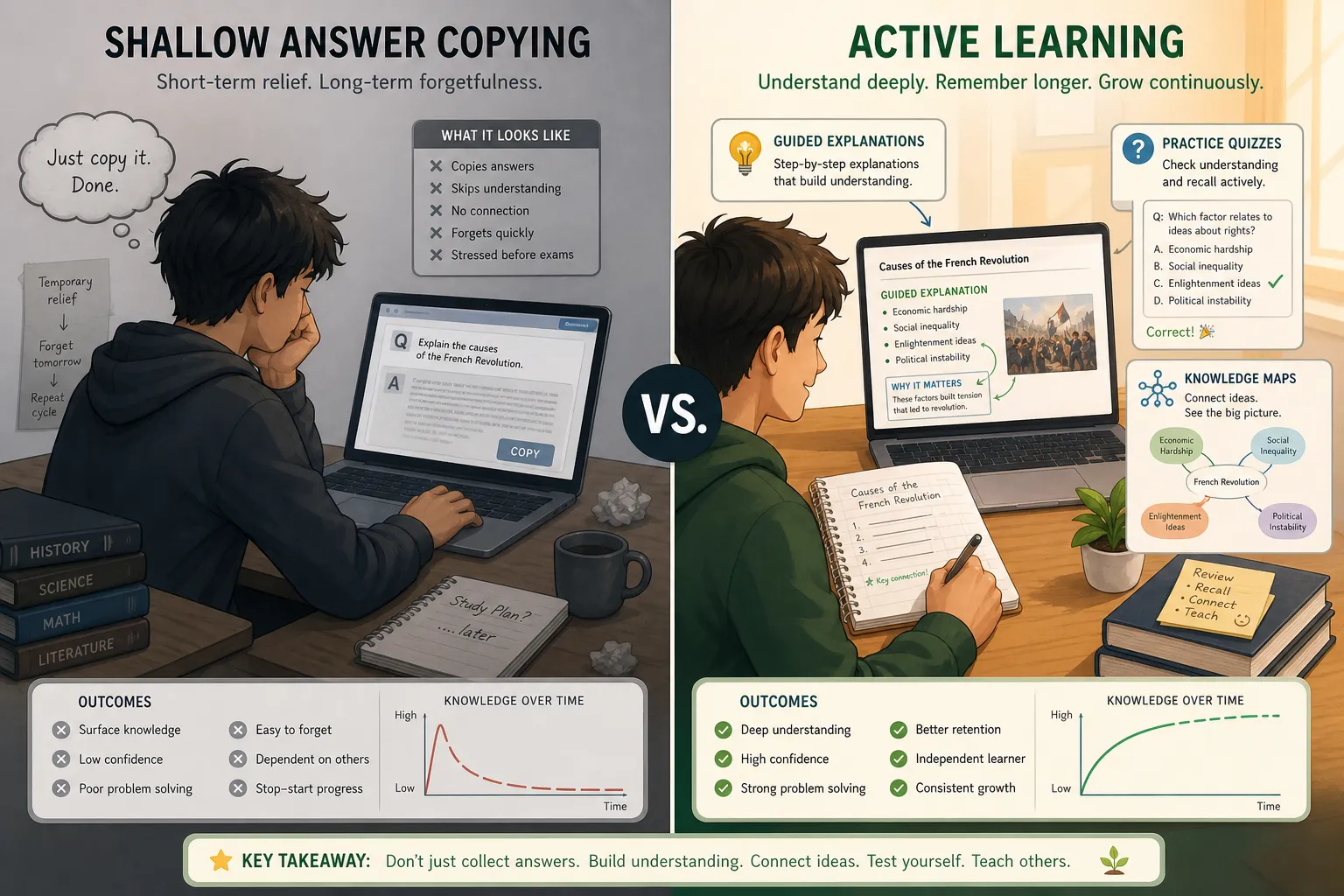
How to Use a Homework Picture Solver Without Replacing Real Learning
The smartest way to use these tools is not as a shortcut, but as a structured support layer.
Start with your own attempt
Before uploading, spend a few minutes identifying:
what the question asks
where you are stuck
what method you think might apply
Even a partial attempt dramatically improves learning.
Ask for explanation before answer
If the tool allows it, request:
hints
first-step guidance
concept reminders
error diagnosis
This keeps you cognitively involved.
Compare the AI method to your own thinking
Do not just read the result. Ask:
Where did my logic diverge?
What rule did I miss?
Could I solve a similar problem alone now?
Turn solved items into review material
This is where full learning platforms outperform isolated solvers. With CramAI, a solved question can feed into a broader learning cycle:
summary creation
knowledge mapping
dynamic assessments
adaptive study planning
multi-format review
Instead of losing the value of that solved problem after one session, the platform can use it to strengthen future performance.
Re-test yourself later
The goal is independence. After seeing the explanation, try:
solving a similar question from memory
explaining the concept aloud
answering a quick self-test
applying the method to a new example
That is how assistance becomes mastery.
What Faster Study Help Should Look Like in 2026
The future of AI homework help is not “type less, get answer faster.” It is broader and more ambitious.
From isolated solving to continuous learning
Students increasingly need platforms that can move across the entire learning cycle:
ingest materials
explain concepts
test recall
diagnose gaps
adapt strategy
reinforce mastery
From generic answers to source-aware support
As trust becomes more important, traceable responses will likely become a standard expectation rather than a premium extra.
From one-size-fits-all help to adaptive planning
A student cramming for finals, an IELTS candidate, a graduate researcher, and a working professional preparing for certification do not need the same support style. Personalized, real-time adjustment will define the next generation of AI study systems.
From answer retrieval to knowledge organization
This is another area where CramAI is especially compelling. Beyond student support, it helps educators, creators, and organizations organize knowledge, generate content, and build structured learning assets. That means the same ecosystem can support both consuming knowledge and producing it.
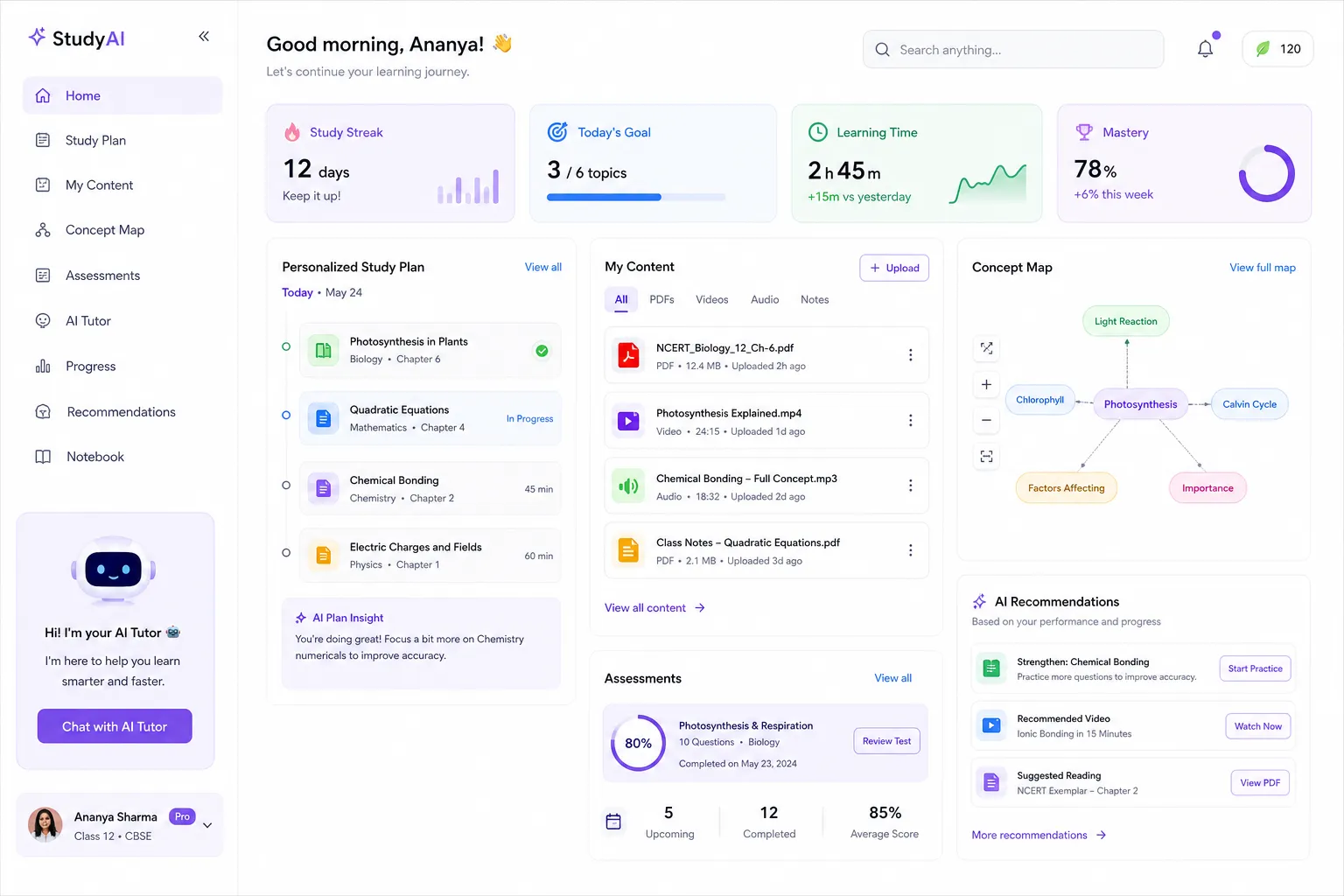
Why CramAI Fits the Next Generation of Homework Help
If all you want is a quick scan-to-answer tool, many products can do some version of that.
But if you want a platform that helps you learn faster, study more strategically, and trust what you are reading, the bar is much higher.
CramAI is built for that higher standard because it goes beyond image solving in several important ways:
It supports the full learning cycle
CramAI is designed to help users learn, test, assess, guide, and improve, not just retrieve an answer.
It works across multiple input types
Students and professionals can upload PDFs, website URLs, YouTube videos, audio files, documents, and slides, then turn them into usable study support.
It anchors answers to source materials
This traceability helps reduce hallucinations and makes explanations easier to verify.
It links concepts for deeper understanding
Instead of treating each question as a separate event, CramAI can surface the conceptual relationships behind it.
It identifies gaps and adapts in real time
Dynamic assessment helps focus study time where it matters most, reducing wasted effort and improving efficiency.
It reduces cognitive overload
By prioritizing what needs attention now, the platform helps learners make progress without drowning in content.
It scales beyond individual students
CramAI also serves educators, creators, and organizations that want structured AI-powered knowledge support and content generation.
Final Verdict
A homework picture solver can be a powerful study accelerator when used well. It removes friction, speeds up access to help, and makes image-heavy assignments easier to handle. But the real value is not in getting answers faster. It is in getting to understanding faster.
That is the standard students should use when choosing a tool.
If the platform only solves, it may save time today but cost learning tomorrow. If it explains, adapts, anchors answers to sources, connects concepts, and helps build a real study plan, it becomes something far more useful: a genuine academic advantage.
CramAI is built for learners who want that advantage. If you are ready to move beyond one-off homework help and into a more strategic, evidence-based way to study, it is the kind of all-in-one AI learning partner worth trying.