
Learning With AI: Smarter Study Strategies
Learning with AI is no longer a futuristic idea. It is quickly becoming the most practical way for students, exam candidates, professionals, and lifelong learners to study more strategically, reduce wasted effort, and build deeper understanding in less time.
If you are trying to keep up with lectures, dense textbooks, certification prep, IELTS practice, or skill-building on top of a busy schedule, the real challenge is not access to information. It is knowing what to focus on, how to review it, and how to spot gaps before they become poor results.
That is exactly where modern AI-powered learning tools can help. Used well, AI can turn scattered notes, videos, PDFs, slides, and web pages into a more organized and adaptive study system. Instead of rereading everything, you can start learning AI-supported workflows that help you summarize faster, test understanding, connect concepts, and adjust your study plan in real time.
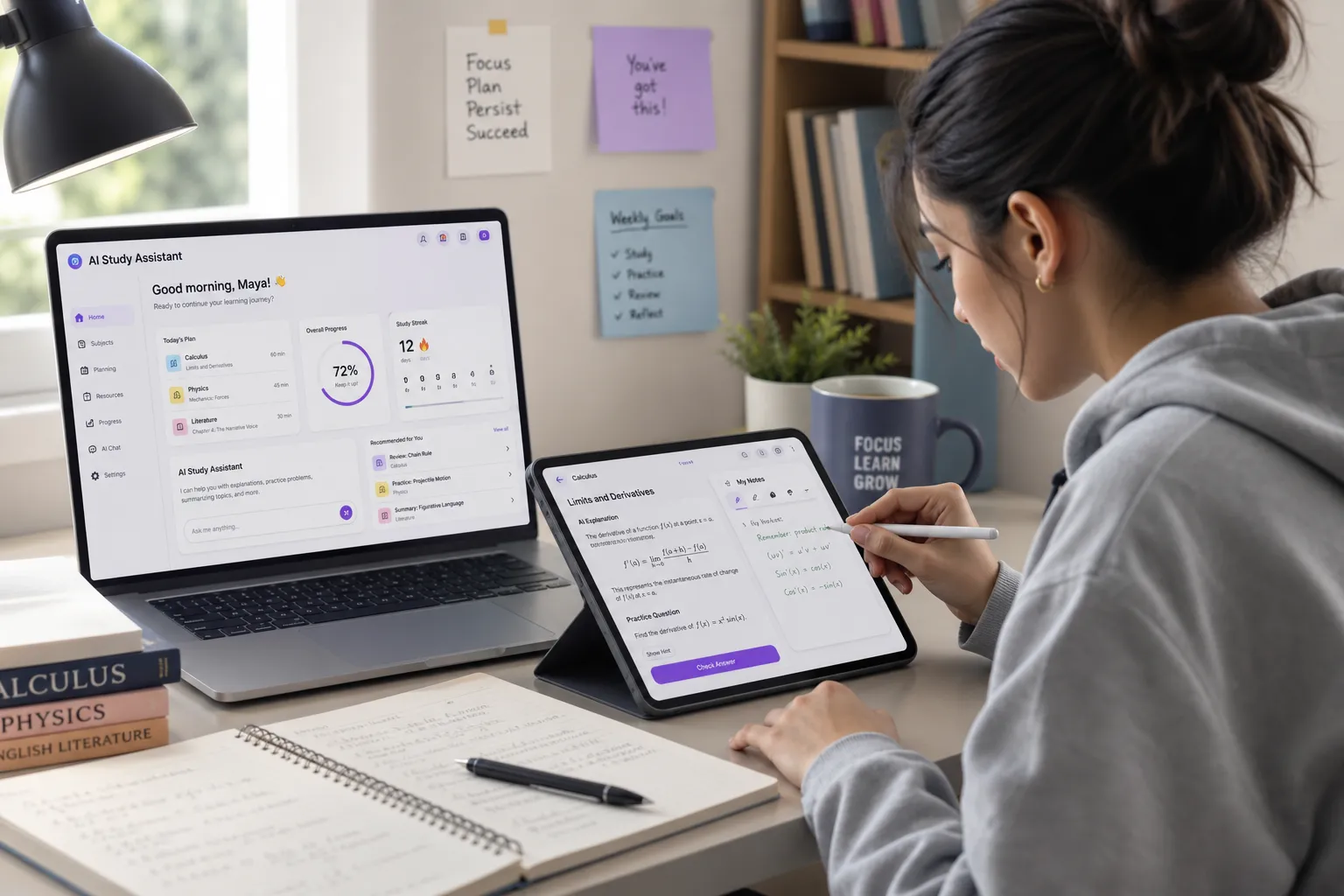
Why AI is changing how people learn
Traditional study habits often break down for one simple reason: they are static. Your course content changes weekly, your strengths and weaknesses shift constantly, and your time is limited. But old-school methods usually rely on fixed notes, passive review, and guesswork.
AI changes that dynamic by making learning more responsive.
Instead of treating every chapter and topic equally, AI can help you:
extract the most important ideas from large volumes of material
generate quizzes and practice prompts from your own sources
identify weak areas before an exam
link related concepts across lectures, readings, and assignments
personalize study plans based on performance and timing
reduce cognitive overload by narrowing your focus to what matters most
This is where the conversation around learning and AI becomes practical rather than theoretical. The best outcomes do not come from replacing real effort. They come from making effort more targeted.
"Students who engaged in repeated testing retained approximately 61% of the material after one week, compared to 40% retention for those who only restudied the content." - Roediger and Karpicke, 2006
That matters because one of the best uses of AI in education is not simply generating content. It is creating more opportunities for active recall, self-testing, and spaced reinforcement.
The biggest shift: from information overload to guided learning
Many beginner articles focus on what AI can produce. Far fewer explain what learners actually need: guidance.
A smart study workflow should answer five questions:
Study Need | What learners usually do | What AI can do better |
|---|---|---|
Understand the material | Reread notes or watch videos again | Summarize, explain, and simplify difficult concepts |
Retain knowledge | Highlight and hope it sticks | Build quizzes, flashcards, and recall exercises |
Find weak points | Wait for a bad grade | Detect knowledge gaps early through dynamic assessments |
Organize topics | Keep scattered files in multiple apps | Centralize PDFs, links, videos, audio, and slides in one system |
Improve over time | Use the same method for every subject | Adjust study strategies based on results and progress |
This is why learners who want to learn more about AI in education should look beyond chat interfaces alone. The real value is in a system that supports the full cycle of learning: learn, test, assess, guide, and improve.
What “learning in AI” actually means for everyday learners
The phrase can sound technical, but in practice, learning in AI-powered education simply means using intelligent systems to make studying more adaptive and evidence-based.
That includes several layers:
Personalized recommendations
AI can analyze what you uploaded, what you already know, and where you are struggling. From there, it can suggest what to review next instead of leaving you to decide blindly.
Multimodal study support
Modern learners do not study from one format. They use lecture recordings, YouTube videos, class slides, articles, documents, and handwritten notes. Strong platforms handle all of that, then turn it into a coherent study plan.
Source-anchored answers
One of the biggest concerns around AI is trust. If an answer appears without showing where it came from, learners may absorb errors confidently. Source traceability solves that problem by tying explanations back to the original material.
Adaptive assessment
A strong AI study platform should not just quiz you. It should diagnose where performance is weak and adjust what comes next.
This is one of the clearest areas where CramAI stands out. Rather than acting as a generic assistant, it works as an all-in-one AI study and exam prep partner. Users can upload PDFs, website URLs, YouTube videos, audio files, documents, and slides, then receive personalized study plans, summaries, knowledge maps, and source-anchored support that adapts as they improve.
Smarter study strategies you can start using now
You do not need a computer science background to start learning AI-enhanced study methods. What matters most is using the right workflow.
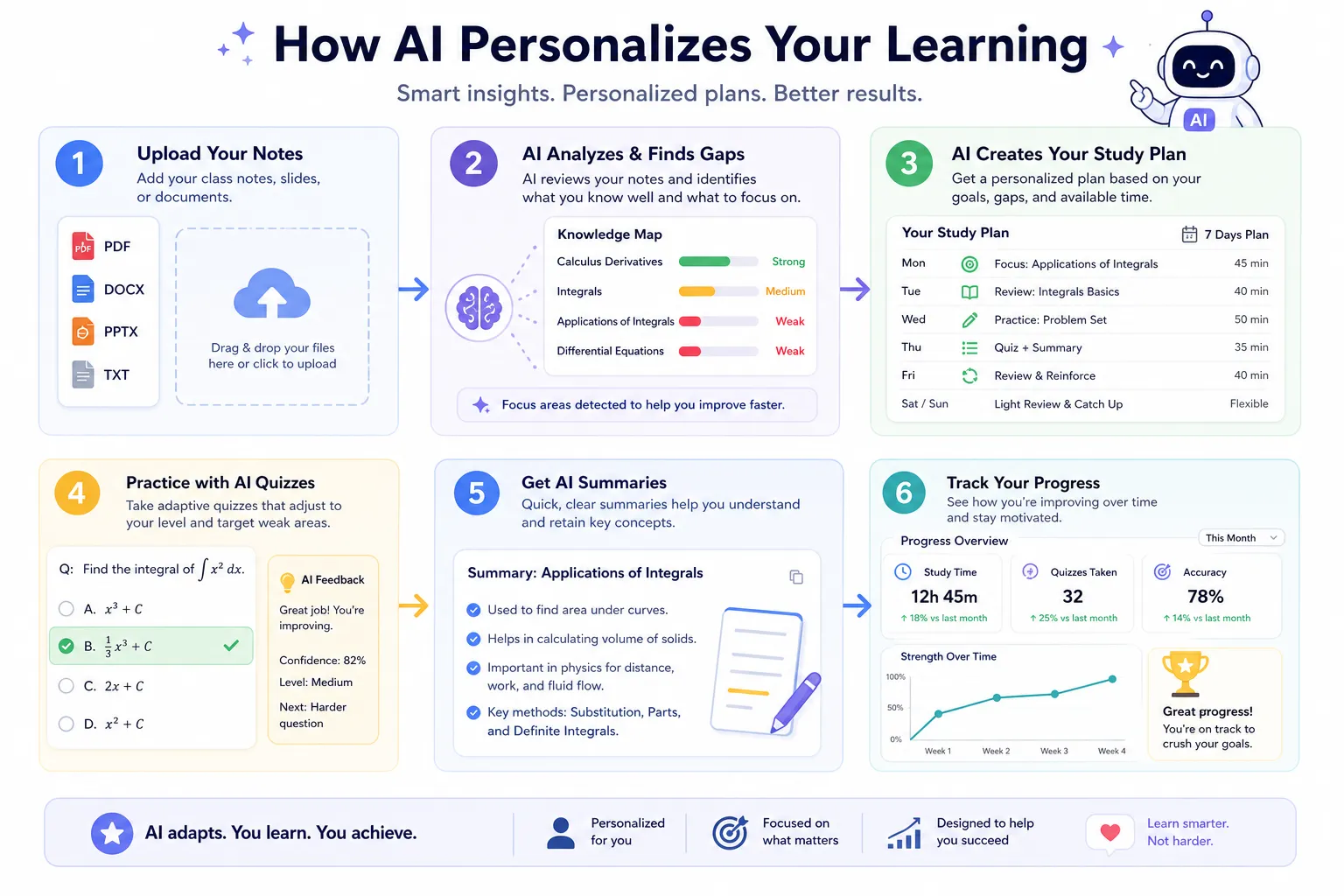
1. Turn raw materials into a focused study plan
Do not begin by rereading everything.
Instead, upload your course material and let AI identify:
core themes
repeated exam-relevant ideas
concept clusters
likely weak points
missing prerequisite knowledge
This gives you a roadmap before you spend hours reviewing.
2. Replace passive review with active recall
Reading notes repeatedly feels productive, but it often creates familiarity rather than mastery.
Use AI to generate:
short-answer questions
multiple-choice quizzes
explain-it-in-your-own-words prompts
scenario-based applications
flashcards based on your exact material
This approach creates retrieval practice, which is one of the most research-backed ways to retain information.
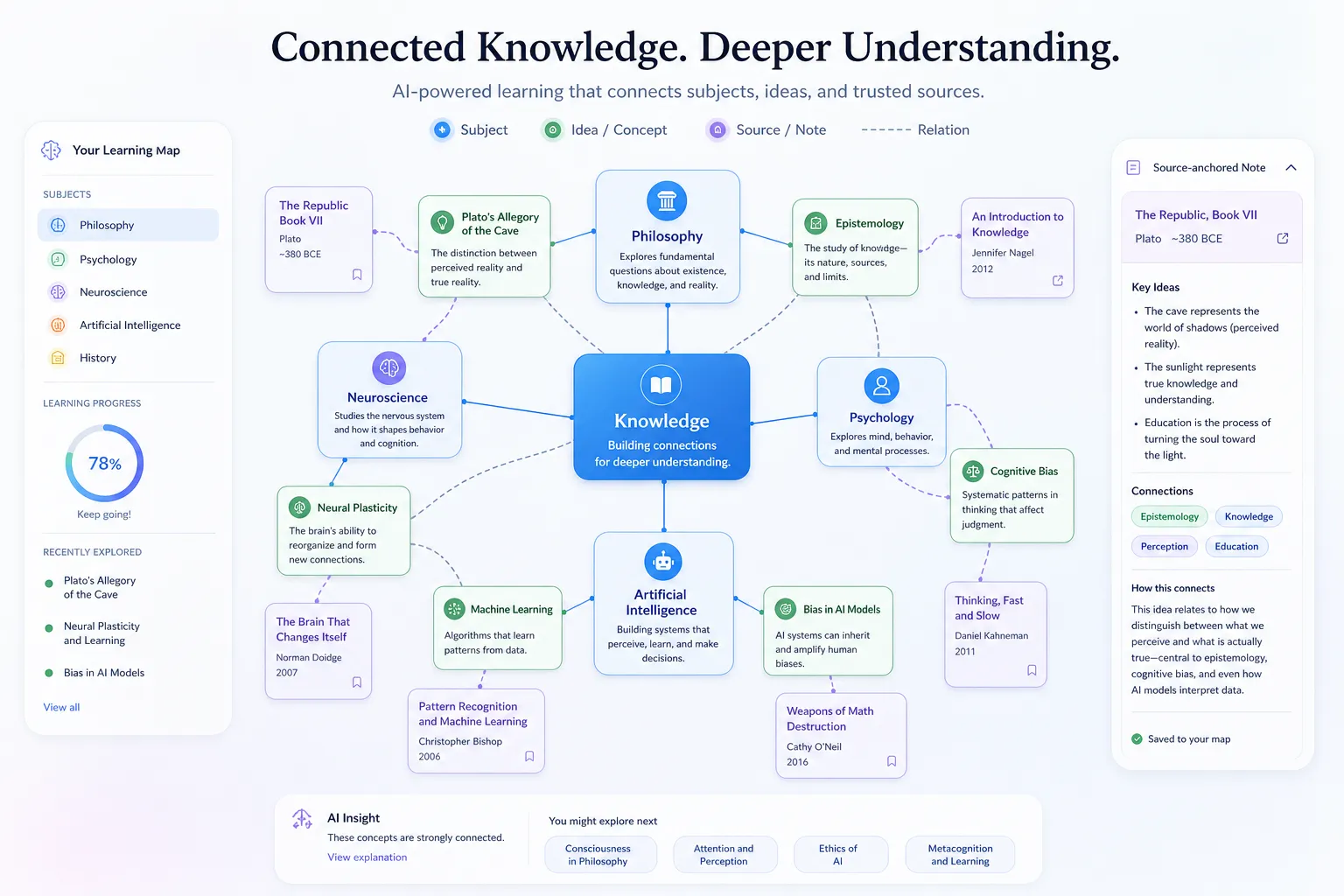
3. Build concept links across topics
One content gap in many articles about learning with AI is the lack of focus on connection-making. Real mastery happens when you can relate ideas across chapters, not just memorize isolated definitions.
For example:
biology students can connect cell respiration to metabolism and energy transfer
law students can connect cases to doctrines and exceptions
IELTS learners can connect vocabulary, reading themes, and speaking arguments
professionals preparing for certifications can connect frameworks, use cases, and compliance logic
CramAI’s connected topic insights and visualized knowledge maps are especially valuable here because they help surface relationships learners may otherwise miss.
4. Study from multiple formats without losing structure
Students rarely have the luxury of one clean textbook. Real study life includes:
professor slides
class recordings
online articles
YouTube explainers
PDFs
shared notes
audio summaries
practice documents
A major advantage of modern AI learning systems is multimodal input. Instead of manually reorganizing every format, you can centralize them and work from one adaptive study environment.
5. Use assessments to guide your next session
A good quiz tells you what you got wrong. A great AI study system tells you what to do next.
That means:
surfacing the concepts behind wrong answers
recommending what source to revisit
adjusting study difficulty
changing review order
focusing attention on high-impact weaknesses
That shift alone can save hours of inefficient review.
Beginner-friendly ways to start learning AI without getting overwhelmed
If you are also interested in learning about AI itself, not just using it to study, the best approach is practical exposure.
You do not need to master machine learning theory to benefit from AI tools. Start with these steps:
Use AI for one specific study task first
Choose one narrow use case such as:
summarizing a chapter
generating practice questions
explaining a difficult topic
converting lecture notes into flashcards
This helps you build confidence without feeling buried in features.
Compare AI outputs against your sources
Do not trust any tool blindly. Review answers against your notes, readings, and official materials. Platforms with source traceability make this much easier and safer.
Learn the logic behind the system
As you use the tool, notice what works:
When does it explain well?
When does it miss nuance?
What prompts produce better outputs?
Which study formats save the most time?
That is a useful entry point if you want to start learning AI as both a user and a more informed digital learner.
Move from tool usage to strategy design
Eventually, the goal is not just using AI. It is designing a study system around it.
That includes combining:
source review
AI summaries
self-testing
revision cycles
gap analysis
progress tracking
Understanding learning models in AI without the jargon
For readers curious about the technology itself, it helps to know that AI tools rely on different patterns of training and prediction. You do not need the math, but a simple overview can help you use these systems more intelligently.
What is a learning model in AI?
A learning model in AI is the underlying system that detects patterns in data and uses them to make predictions or generate outputs. In education tools, that might mean identifying important concepts in a text, creating a summary, clustering related ideas, or generating practice questions.
Why this matters to learners
When people talk about learning models in AI, they are often discussing how well a system can:
interpret your material
understand context
prioritize relevance
generate explanations
personalize outputs
For learners, the practical question is not “Which architecture does this use?” but “Does this help me understand, remember, and perform better?”
The real-world takeaway
The best educational AI platforms are not simply built around one model. They combine multiple capabilities into a learning workflow. That is why specialized study tools often outperform general-purpose AI chat for academic preparation.
What top AI study content often misses
Most articles on this topic repeat the same surface-level ideas: AI saves time, AI makes summaries, AI gives quizzes. That is true, but incomplete.
The more useful perspective is this:
AI should reduce cognitive load, not add another app to manage
If learners still need to move between five tools, verify everything manually, and build their own study structure from scratch, the time savings disappear.
Trust and traceability matter
A generic response is not enough for serious learners preparing for exams, certifications, or graded assessments. Source-anchored answers create accountability and make review much more dependable.
Concept linking is as important as summarization
A summary helps you compress information. A connected knowledge map helps you understand it. That difference is huge for higher-order learning.
Dynamic adaptation beats static study plans
A study plan created on day one may already be wrong by day three. Real preparation improves when your system adjusts to new materials and updated performance.
Where CramAI fits in the future of smarter learning
CramAI is designed around the full learning journey, not just one-off AI outputs. That makes it especially relevant for modern learners who need more than quick summaries.
Its value becomes clear when you compare common study pain points with what an integrated platform can actually solve.
Common Challenge | What learners need | How CramAI helps |
|---|---|---|
Too much material in too many formats | One place to turn inputs into study assets | Supports PDFs, URLs, YouTube videos, audio, documents, and slides |
Generic explanations that may be unreliable | Trustworthy outputs with evidence | Provides source-anchored answers with traceability |
Weak retention after passive review | Recall-based learning workflows | Generates personalized study plans, assessments, and review support |
Unclear gaps before exams | Real-time diagnosis | Identifies knowledge gaps and adjusts study strategy automatically |
Siloed understanding | Cross-topic synthesis | Builds visualized knowledge maps and connected topic insights |
Need for content creation and organization | Scalable creator tools | Includes Creator Studio for knowledge systems, content generation, and brand building |
For students and exam candidates, that means better preparation with less wasted effort. For educators and creators, it means a more scalable way to organize expertise and produce structured learning materials. For institutions and enterprise teams, it creates a path to more tailored AI learning support across groups.
AI study habits that produce better results
If you want better outcomes, focus on habits, not novelty. Here are the behaviors that matter most.
Study in shorter, feedback-rich cycles
Use AI to create 20- to 30-minute loops:
review a concise summary
answer a short set of recall questions
inspect mistakes
revisit the source
retry with higher difficulty
This creates momentum and makes progress visible.
Anchor every session to a real goal
Examples include:
finish one chapter with 80% quiz accuracy
connect three related concepts in your own words
master one weak domain before moving on
prepare one mock speaking or writing response for IELTS
complete one timed certification drill
Keep the original source close
Even when AI is helping, the source material remains your ground truth. Use tools that let you move back and forth between explanation and evidence.
Review patterns, not just scores
A wrong answer is useful, but a pattern of wrong answers is far more valuable. Look for recurring issues such as:
confusing similar concepts
forgetting steps in a process
missing vocabulary context
struggling with application questions
relying on memorization without understanding
That is where adaptive study tools become especially powerful.
"In the United Kingdom, a YouGov survey of over 1,000 university students revealed that 66% use AI for study-related tasks, with 33% using it weekly." - YouGov
The takeaway is not simply that AI is popular. It is that learners are actively searching for better systems. The opportunity now is to use those systems with more intention.
A practical weekly workflow for learning with AI
Here is a simple framework you can adopt immediately.
Monday: ingest and organize
Upload the week’s readings, lecture notes, recordings, and links. Generate a high-level overview and identify priority concepts.
Tuesday: understand
Use AI explanations and summaries to clarify difficult sections. Build a concept map of the most important ideas.
Wednesday: test
Generate quizzes and short-answer prompts from your own material. Focus on active recall, not rereading.
Thursday: diagnose
Review weak points. Let the system surface source-linked explanations and recommend the next review targets.
Friday: integrate
Connect the week’s topics to earlier material. Ask for cross-topic comparisons, examples, and applications.
Weekend: simulate performance
Run a timed review session, mock exam block, or writing/speaking practice based on your exam format.
This kind of cycle is far more effective than cramming because it creates repetition, reflection, and adjustment.
The role of creators, educators, and organizations
Learning with AI is not only for students. It is increasingly relevant for anyone who teaches, trains, or structures knowledge.
For educators
AI can help transform lectures, articles, and curriculum materials into review guides, practice questions, and structured learning pathways.
For creators
If you publish educational content, Creator Studio-style workflows can help you organize expertise, build topic systems, generate assets, and strengthen your knowledge brand.
For teams and institutions
AI-powered study environments can support onboarding, certification prep, internal training, and scalable skill development across larger groups.
This broader use case matters because the future of learning is not just personalized. It is also scalable.
Final verdict: AI should make studying more human, not less
The best use of AI in education is not replacing thinking. It is removing friction so more thinking can happen.
When learners can spend less time sorting files, rewriting notes, guessing what to review, and doubting whether answers are accurate, they gain more space for the work that actually matters: understanding, remembering, applying, and improving.
That is why the future of learning with AI belongs to platforms that do more than generate text. It belongs to systems that guide the full study process, adapt in real time, and keep learners connected to trustworthy sources.
If you want a smarter way to prepare for exams, absorb dense materials, or build long-term knowledge across formats, CramAI is built for exactly that. It combines personalized study plans, source-anchored answers, dynamic assessment, connected topic insights, and creator-friendly knowledge tools into one focused environment.
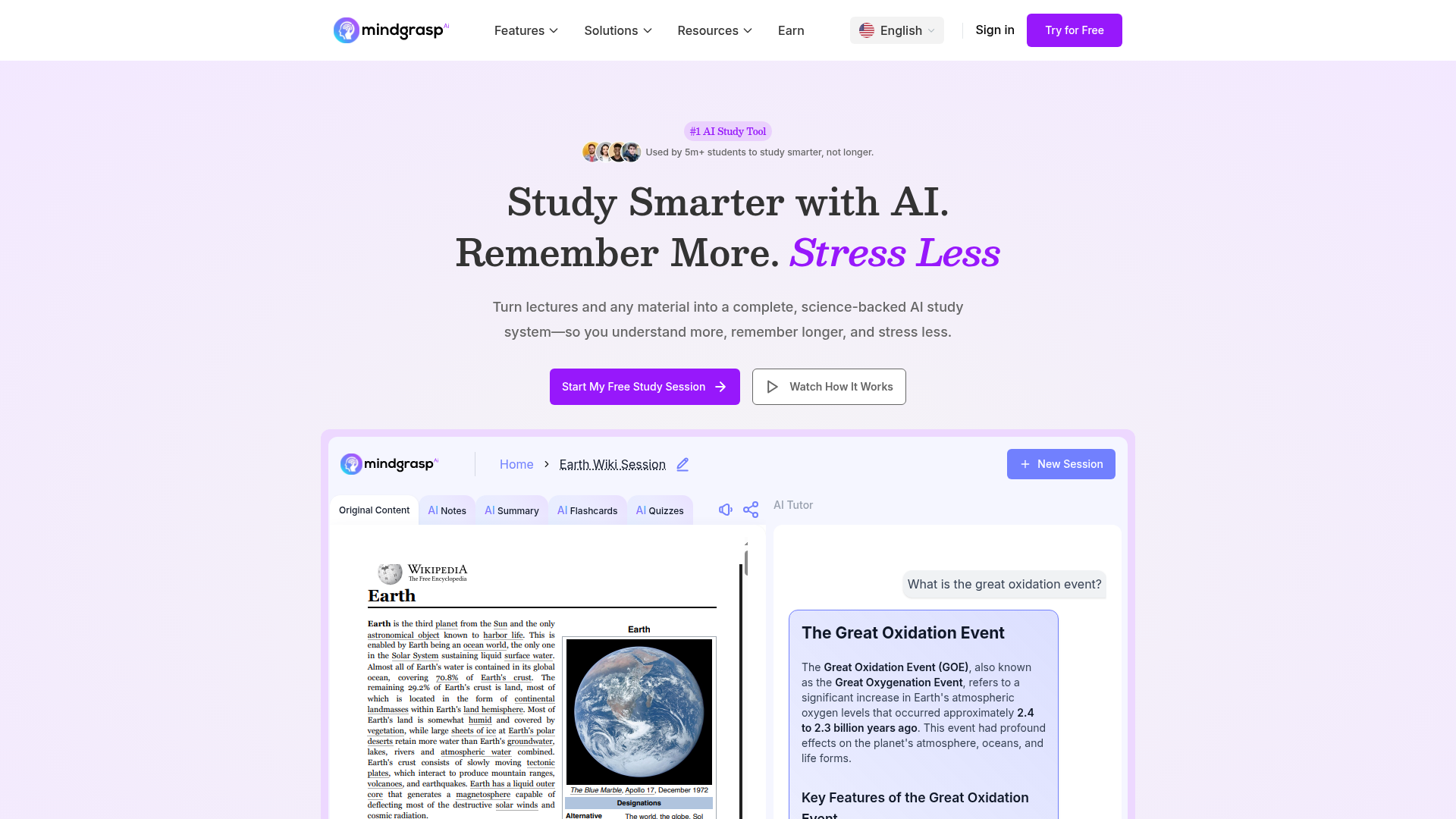
If you are ready to study with more clarity, less cognitive overload, and better evidence behind every step, now is the right time to try CramAI and turn your materials into a personalized learning system that actually evolves with you.